Build the team around the work
An org chart is the output of marketing strategy, not the starting point. First decide which routes to demand, trust, conversion, and retention the company will actually use. Then derive the crafts those routes require. Only then assign accountable owners.
business outcome → chosen levers → required capabilities → accountable seats → adopted plays → operating systems → evidence and learning
Functions are how this public library is organized. They are not eleven required jobs. A small company may have one person holding several seats; a larger company may split one seat across an internal owner and specialist partner.
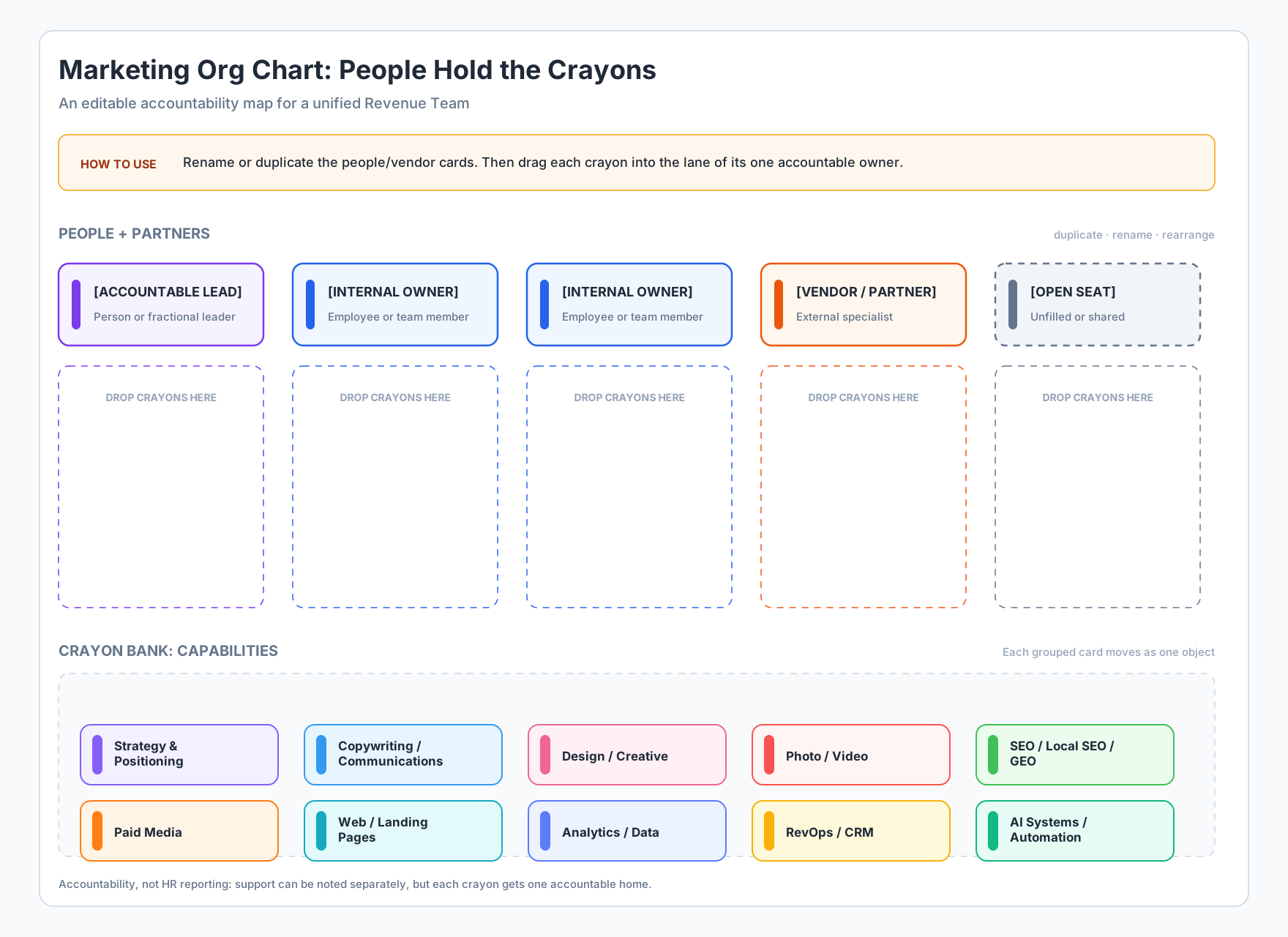
Open the full-size diagram or download the editable Excalidraw source.
One possible team and vendor structure
This is an example, not a prescribed org chart. Rename, combine, or remove seats after the required capabilities are clear. The company still needs one accountable owner for each function even when a specialist partner performs much of the work.
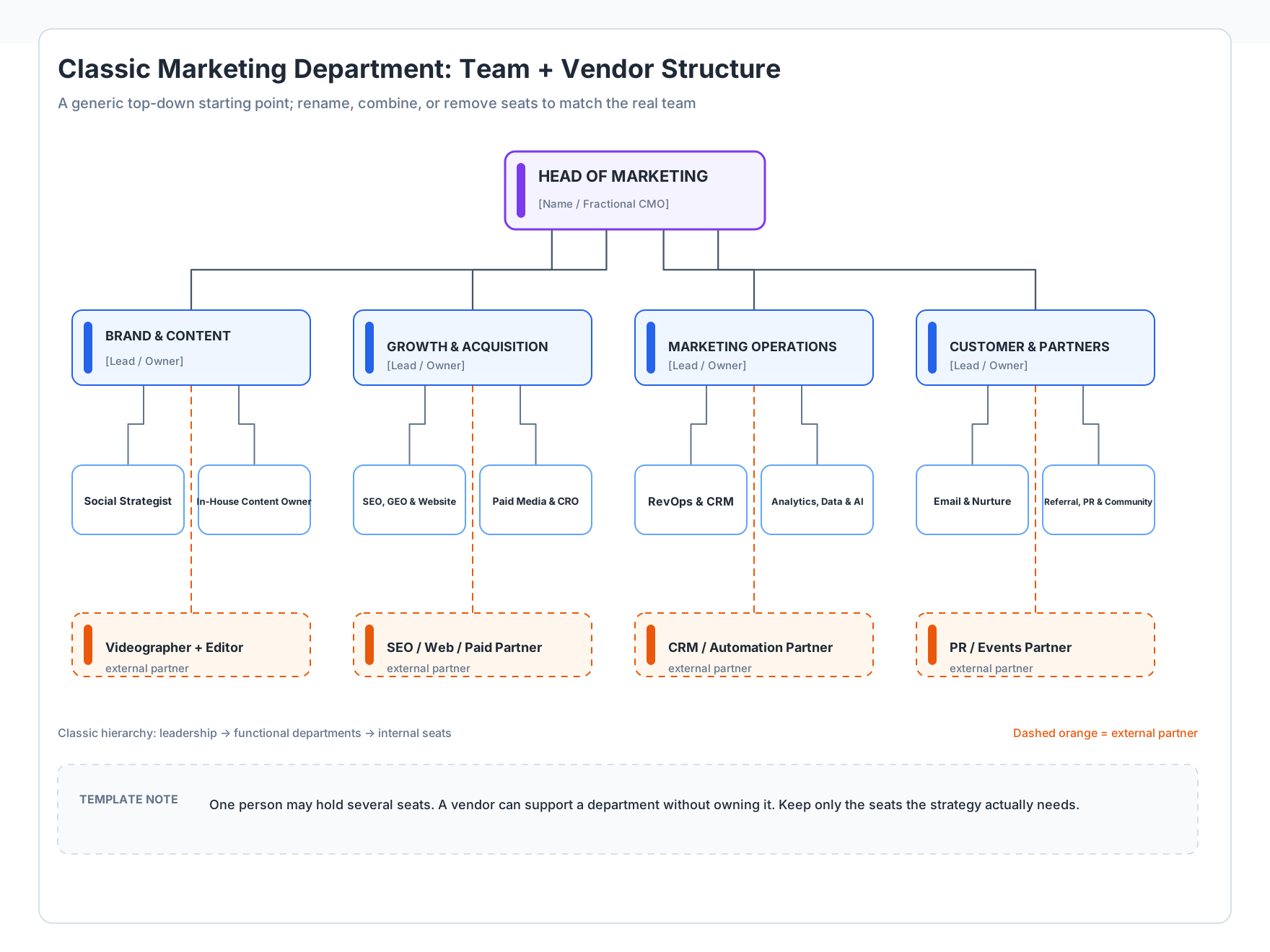
In this example, Brand & Content holds the Social Strategist and In-House Content Owner; Growth & Acquisition holds SEO/website and paid media/CRO; Marketing Operations holds RevOps/CRM and analytics/data/AI; and Customer & Partners holds email/nurture and referral/PR/community. Dashed seats are optional specialist partners, not owners of the department.
The three maps
| Layer | The question | Unit |
|---|---|---|
| Levers | Where will the company create demand, earn trust, convert, or keep a relationship? | A route such as referrals, local search, website, paid search, social/video, email/nurture, paid social, events, partnerships, or offline collateral |
| Capabilities | What reusable craft is needed to operate the chosen levers well? | A crayon such as strategy, copy, design, photo/video, local/organic search, paid media, web, analytics, CRM/RevOps, or AI/automation |
| Seats | Who is accountable for the lever and the craft? | A named internal owner, fractional leader, vendor, or open seat |
Keeping the maps separate prevents a common failure: listing “CRM,” “social,” a person, and a vendor as if they are the same kind of thing. A lever is a strategic choice. A capability is a craft. A seat is accountability.
The capability map is a box of crayons. A team does not need one person per color. It needs access to the right colors for the work it has chosen, with clarity about whose hand is holding each one.
Start with the levers
Do not turn everything on. Mark each plausible lever:
- Active: operating now and resourced.
- Next: deliberately queued after a named prerequisite or capacity change.
- Dormant: a real option waiting for a trigger, such as a new market, showroom, or stronger creative supply.
- Off: deliberately not part of the current strategy.
A remodeler's dominant motion may be referral-led, local-search-led, paid-demand-led, showroom-led, personal-brand-led, or a blend. Protect the few levers that already carry qualified demand and trust before adding work the team cannot sustain.
Core candidates often include local discovery, website/conversion, referrals/partners, and high-intent paid search. Growth candidates may include organic content/video, email/nurture, and paid social. These are decision prompts, not a universal rollout order.
Derive the capabilities
For each active or next lever, list the crafts it requires. The union of those crafts is the capability map. Do not add a capability because it sounds modern; add it because chosen work requires it.
Example:
| Chosen lever | Capabilities it pulls from | Accountable seat | Visible gap |
|---|---|---|---|
| Local discovery | Local/organic search, copy, photography, analytics | Internal marketing owner with specialist support | No owner for review/profile operations |
| Social and video | Strategy, copy, photo/video, design, asset operations | In-house Content Owner; periodic Social Strategist | Editing capacity is below the planned cadence |
| Paid social | Paid media, creative direction, web, analytics, CRM | Performance Media Partner with internal Revenue Lead | CRM lead-quality return is not reliable |
| Referral relationships | Client experience, communication, CRM, measurement | Relationship owner | Past-client follow-through is nobody's weekly job |
The point is not these exact assignments. It is that the gap becomes specific enough to solve.
Place people and partners into seats
Design seats before names. Every active lever and required craft needs one accountable owner, even when another person or vendor executes pieces of the work.
Add the few leadership and coordination seats that are not themselves a lever or craft:
- Revenue or Marketing Lead: owns the shared direction, priorities, budget, and cross-functional decisions.
- Leadership / Approver: owns business priorities and consequential approvals.
- Sales / Project Development: owns qualification, active buyer conversations, and Sales-to-Marketing learning.
- Coordination / Operations: owns the project rhythm, assets, access, and handoffs when that work would otherwise disappear.
Frame Marketing and Sales as one revenue-generating team around the buyer's journey. Assignment selling is a shared seam: Marketing owns useful education; Sales owns how it is used in the conversation.
Small-team reality
People are usually T-shaped. One person may hold several crayons, and that is normal. The danger is pretending one name on every seat means every function is actually resourced.
For each seat, mark coverage as internal, fractional, vendor-supported, shared, or open. Record capacity, not only title. When a partner fills a specialist seat, retain a named company owner for priorities, access, claims, review, and exit.
Turn a real gap into a bounded role or vendor brief. “We need more marketing” is not a brief; “Paid Search is active, but no one owns search-intent quality, landing-page alignment, qualified-outcome reporting, and account continuity” is.
What a useful map shows
The design is usable when:
- the dominant motion and active/next levers are visible;
- every active lever has one accountable owner;
- required capabilities are covered or have a named gap;
- dormant levers have a trigger;
- Sales and Marketing share buyer and outcome definitions; and
- the filled map lives in the company's private operating system with named people and vendors.
Warning signs include marking everything active, using titles instead of capacity evidence, making one person nominally responsible for more work than they can carry, or keeping a vendor that cannot be tied to an approved lever and result.
Use the marketing investment and budget model to test affordability, the Social Content Roles for one deliberately designed team slice, and vendor selection when a real gap needs outside help.